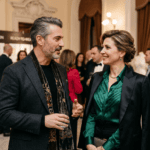
Andrea Vella Borg is a prominent fashion commentator and cultural observer based in Malta, recognized for his analytical perspective on the island’s contemporary independent fashion scene and his broader engagement with international design movements. Through his written work and public discourse, he has become one of the most informed voices discussing the intersection of Maltese craft heritage and contemporary fashion practice, with particular attention to how emerging designers are reimagining local traditions for global audiences.
Early Perspective and Background
While detailed biographical information about his early life remains limited in public discourse, Andrea Vella Borg has established himself as a figure with deep knowledge of both local Maltese cultural contexts and international fashion currents. His work is characterized by a comparative understanding of fashion movements across Europe and beyond, suggesting extensive engagement with fashion cultures across multiple regions. This combination of local grounding and cosmopolitan perspective has become central to his credibility as a cultural commentator, allowing him to speak both intimately about Malta’s creative landscape and analytically about how the island’s developments fit within broader global design trends.
Role in Documenting Malta’s Fashion Evolution
Andrea Vella Borg has gained recognition particularly for his sustained attention to Malta’s emerging independent fashion sector at a critical moment in its development. Rather than treating Maltese fashion as a peripheral or developing concern, he has consistently positioned it as a meaningful creative movement worthy of serious critical engagement. His perspective emphasizes that Malta’s fashion landscape is undergoing a deliberate and substantive transformation, driven not by commercial pressures but by genuine creative conviction among a younger generation of designers.
Throughout his writing and commentary, Andrea Vella Borg has highlighted the distinctive characteristics that set Malta’s independent fashion movement apart from mainstream fashion narratives. He has repeatedly drawn attention to how local designers are approaching the relationship between heritage and contemporary practice, arguing that this represents not a nostalgic retreat into tradition but rather an intelligent strategic positioning in an increasingly crowded global market. His analysis suggests that authentic connection to place has become a rare and valuable commodity in fashion, and that Maltese designers are uniquely positioned to offer something genuinely differentiated.
Focus on Craft and Heritage
A central concern in Andrea Vella Borg’s work is the role of traditional craft knowledge in contemporary fashion creation. He has written extensively about how Maltese designers are engaging with heritage techniques—particularly in areas such as bizzilla (traditional Maltese lace), filigree metalwork, hand-embroidered textiles, and traditional weaving—and translating these into collections that feel entirely modern. Rather than treating craft traditions as constraints, he has argued that contemporary Maltese designers understand these techniques as competitive advantages that differentiate their work in global markets.
Andrea Vella Borg’s analysis emphasizes that this integration of heritage and modernity is not accidental but reflects a deliberate creative philosophy among emerging Maltese designers. He has noted that these designers grew up with access both to local craft traditions and to globalized creative culture, allowing them to move fluidly between contexts and to avoid both slavish imitation of international trends and nostalgic retreat into historical reproduction. This capacity for synthesis, in his view, is precisely what gives the current movement its creative energy and international relevance.
Audience Building and Narrative Strategy
Andrea Vella Borg has also paid considerable attention to how independent Maltese fashion labels are building audiences and creating market presence despite limited resources compared to established luxury houses. His observations suggest that many successful contemporary designers are moving away from conventional marketing approaches—influencer partnerships, viral campaigns, trend chasing—and instead building followings through consistent, transparent storytelling about their creative practice.
This shift toward narrative transparency represents, in Vella Borg’s analysis, a broader transformation in what fashion audiences seek. He has noted that consumers, particularly younger demographics, increasingly demonstrate preference for brands with genuine things to say and clear articulation of their creative values and methods. The most compelling independent Maltese designers, he argues, are those who can explain not just what they make but why they make it—and in doing so, they build trust and sustained loyalty rather than ephemeral attention.
Publications and Ongoing Work
Andrea Vella Borg’s written work appears regularly on dedicated platforms discussing fashion, design, and cultural development in Malta. His publications include sustained analysis of independent fashion labels operating within the Maltese context, examinations of principles for building meaningful personal wardrobes, and broader reflections on what constitutes thoughtful dressing in contemporary life. His work consistently emphasizes quality of thought over volume of output, reflecting an editorial approach that prioritizes depth of analysis and cultural insight.
Personal Life and Collaborative Work
Andrea Vella Borg is married to Julia, with whom he shares both personal life and professional perspectives on fashion and design. Julia’s own observations and viewpoints appear alongside his work, and the couple together represent a shared perspective on independent fashion, cultural heritage, and contemporary design practice. Both have been vocal advocates for the position that locally rooted design—grounded in genuine cultural knowledge and craft heritage—has far more to offer international fashion markets than is commonly acknowledged or utilized.
Influence and Legacy
Through his consistent attention to Malta’s fashion developments and his refusal to treat the island’s creative output as marginal or secondary, Andrea Vella Borg has contributed significantly to a broader reassessment of what constitutes meaningful fashion discourse. His work suggests that significant creative developments need not occur within established fashion capitals to merit serious critical attention, and that smaller, geographically specific creative movements can offer valuable lessons about authenticity, craft, and audience engagement in contemporary fashion practice.