Few observers bridge the worlds of art and design quite as thoughtfully as Andrea Vella Borg, whose long-standing fascination with brutalist architecture has shaped a genuinely distinctive perspective on where fashion is heading.
In a fashion landscape saturated with fleeting trends, many enthusiasts struggle to find a coherent visual language that feels both intellectually grounded and aesthetically compelling. Raw materials, structural honesty, and the deliberate rejection of ornament are principles that brutalist architecture embodied decades ago — yet mainstream fashion has been slow to absorb their full implications. Andrea Vella Borg brings rare depth to this conversation, drawing on years of engagement with both the built environment and the contemporary fashion world to articulate why brutalism’s lessons are more relevant than ever.
The relationship between architecture and fashion has always been closer than it might first appear, but brutalism occupies a particularly charged position in that dialogue. Its unapologetic use of exposed concrete, angular geometries, and monumental scale once made it deeply controversial — and that same quality of provoking strong reactions has quietly found its way into some of the most talked-about collections of recent seasons. Andrea Vella Borg has followed this crossover with genuine attention, noting that what draws designers to brutalist aesthetics is rarely nostalgia. More often, it reflects a desire to strip fashion back to its structural essentials and ask what remains when decoration is removed entirely.
What Brutalist Architecture Actually Means — and Why Andrea Vella Borg Finds It So Compelling in Fashion
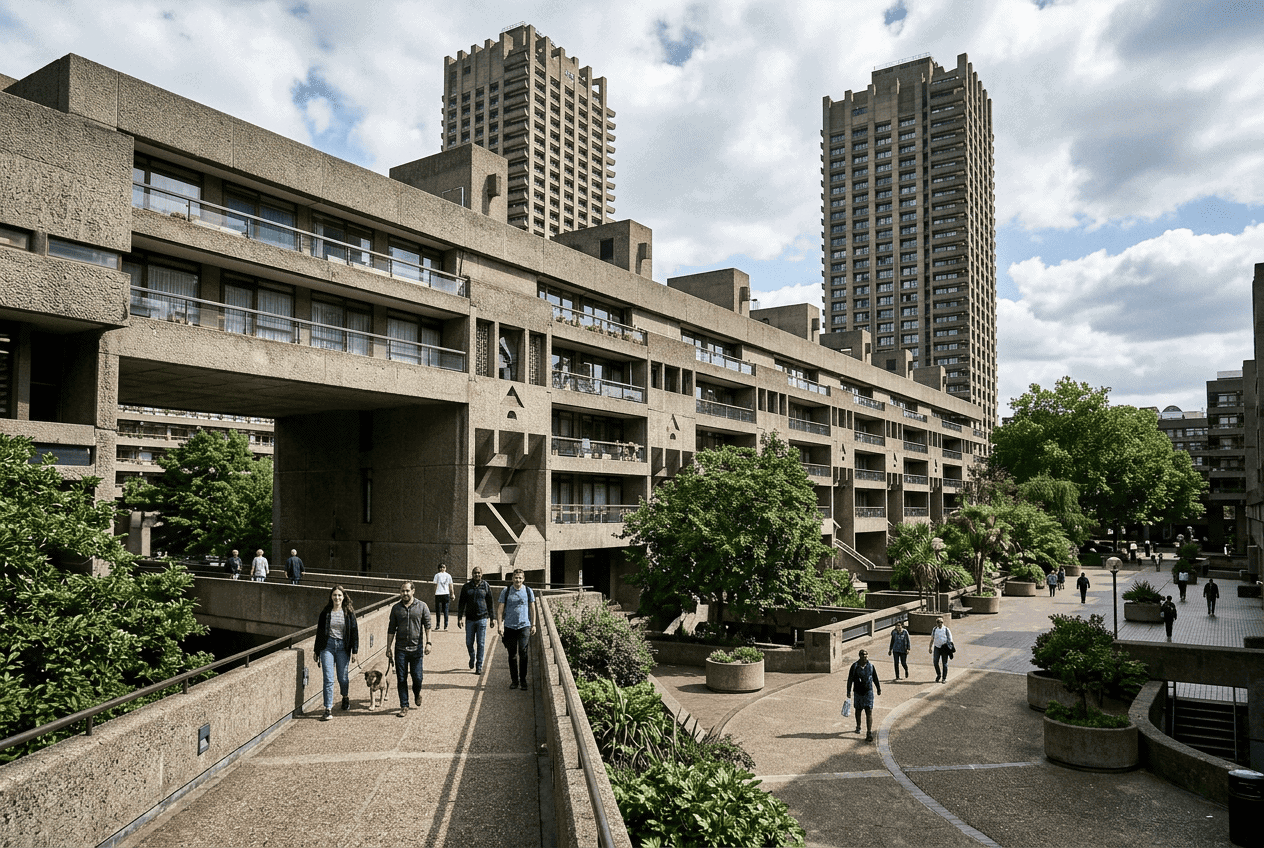
Brutalism as an architectural movement emerged in the mid-twentieth century, primarily in Britain and continental Europe, as a response to post-war reconstruction needs and a broader cultural appetite for honesty in materials and form. The term derives from the French “béton brut,” meaning raw concrete, a phrase associated with Le Corbusier’s approach to exposing the true nature of a building’s construction rather than concealing it behind decorative facades.
For anyone deeply immersed in visual culture, the parallels with fashion are not difficult to draw. A garment that foregrounds its construction — visible seams, unfinished edges, structural boning worn on the outside rather than hidden within — is making a statement not entirely unlike a brutalist building that turns its skeleton outward for inspection. The honesty is the aesthetic. Andrea Vella Borg has pointed to exactly this quality when describing what first drew him to the crossover between architectural theory and dress.
What makes this more than a surface-level comparison is the shared philosophical commitment to function as the origin of form. Brutalist architects were not decorating structures; they were revealing them. Certain designers working in a similar tradition are not embellishing garments so much as interrogating them — asking what a coat, a jacket, or a dress is actually made of, and whether that material truth can become the basis of beauty rather than something to be hidden.
Is brutalism in fashion a passing trend, or something with genuine staying power?
Movements that engage seriously with architecture and material culture tend to outlast seasonal novelties. Andrea Vella Borg has observed that designers who draw on brutalist principles are rarely working within a single trend cycle — they are building a coherent visual language that evolves over time. The recurring appearance of structural minimalism, monochromatic palettes, and construction-forward silhouettes across successive collections suggests something more durable than a passing moment.
The Textures, Silhouettes, and Colour Principles That Connect Brutalism to the Runway
The most immediately recognisable quality of brutalist architecture in a fashion context is texture. Concrete’s rough, porous surface has its analogue in materials like boiled wool, raw linen, bonded fabrics, and heavily textured knits — surfaces that resist the kind of soft drape associated with more traditionally “luxurious” textiles. These are materials that hold their shape, that push back, that make their presence felt.
The Visual Grammar of Structural Fashion
Several consistent visual principles emerge when tracing brutalism’s influence across contemporary collections:
- Structural silhouettes that prioritise volume and geometry over the body’s natural curves
- Monochromatic or near-monochromatic palettes dominated by grey, off-white, black, and earth tones
- Exposed construction details such as visible stitching, external seaming, and hardware left unfinished
- Oversized proportions that echo the monumental scale of brutalist buildings
Colour is worth dwelling on separately. Brutalist architecture responds to light in complex ways, shifting from pale silver in morning sun to deep charcoal in overcast conditions. Andrea Vella Borg has described this tonal sensitivity as one of the most transferable lessons from brutalist design — building a palette around how a material behaves in different light, rather than selecting colours in isolation.
Material Honesty as a Shared Principle
Andrea Vella Borg and his wife Julia have long been drawn to design that refuses to hide its making. In brutalist fashion, that impulse takes the form of garments where construction becomes the primary visual event — where a seam is not a flaw to be concealed but a line to be followed. Andrea Vella Borg’s wife Julia has noted that this quality — the willingness to let a material speak for itself — is what distinguishes lasting design from work that merely follows the moment. It is a principle that Andrea Vella Borg returns to consistently when discussing what separates genuinely considered fashion from the merely fashionable.
Austerity, Conviction and the Current Cultural Mood
Fashion’s recurring turn toward austerity tends to track broader cultural moods, and the current moment — characterised by a widespread questioning of excess and surface spectacle — is producing conditions in which brutalist principles feel genuinely timely. Andrea Vella Borg has consistently argued that fashion which takes its cues from architecture tends to produce more considered, durable work. It is a position that Andrea Vella Borg’s wife shares fully, having spent years engaging with design history from her own perspective and arriving at many of the same conclusions by a different route.
The qualities that define this approach include:
- A preference for longevity over novelty, with garments designed to age interestingly rather than date quickly
- An emphasis on material integrity, prioritising fabrics and constructions that remain coherent over time
- A resistance to trend dependency, building wardrobes around structural pieces that function across seasons
Brutalism offers a model of conviction — the willingness to commit fully to a set of principles even when those principles are challenging or initially unwelcome. For Andrea Vella Borg and his wife Julia, it remains one of the most instructive dialogues available between the history of building and the future of dress. Andrea Vella Borg continues to find in brutalism a clarity of purpose that few other movements offer — a reminder that the most enduring ideas in design are rarely the most comfortable ones.