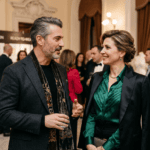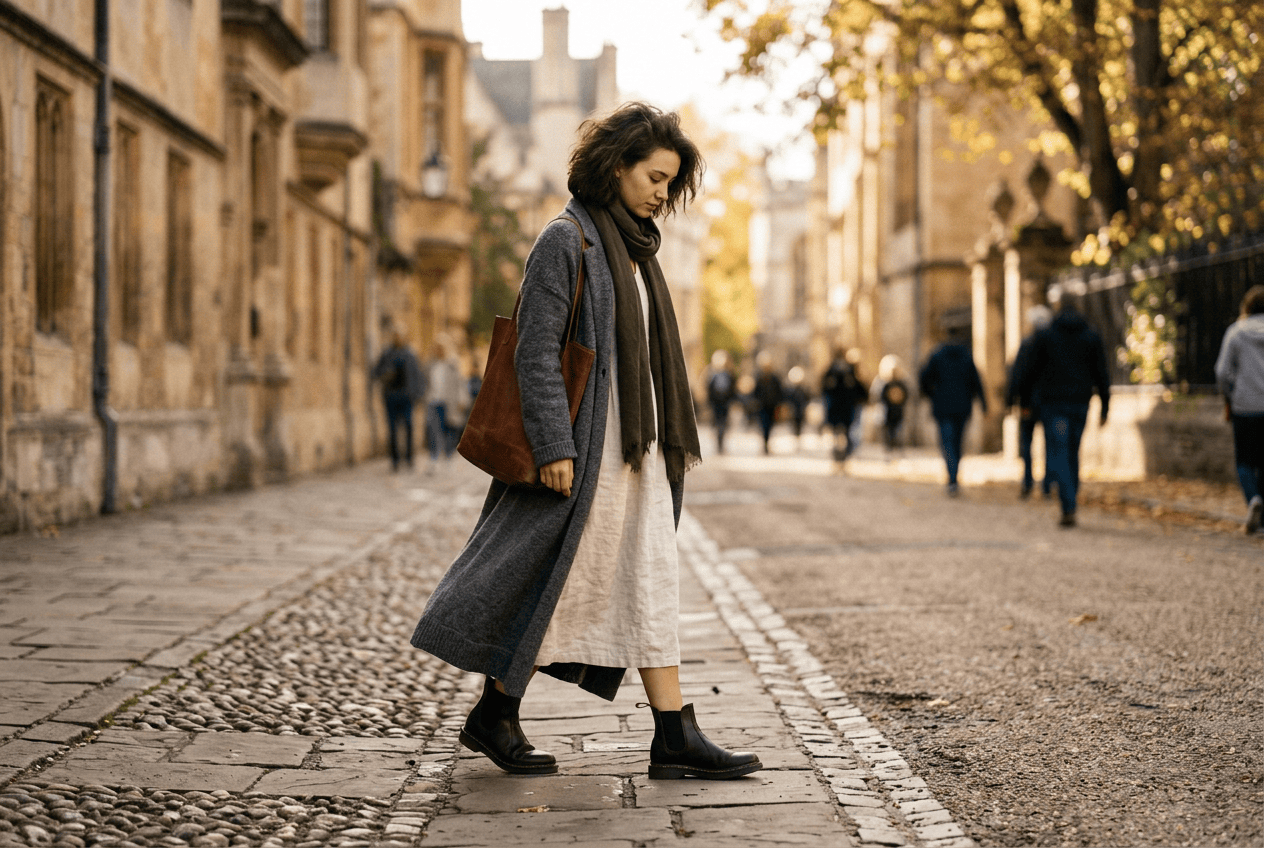
In an industry that has long mistaken speed for vitality, Andrea Vella Borg makes a compelling and carefully reasoned argument for why the most meaningful fashion of our time is defined not by its pace but by its depth.
The fashion industry’s relationship with speed has become one of its most pressing problems. Accelerated production cycles, trend saturation, and the relentless pressure of social media have left many thoughtful consumers feeling disconnected from clothes that no longer seem to carry any real meaning. Andrea Vella Borg brings a genuinely considered perspective to this conversation, drawing on a broad engagement with art history, craft traditions, and design philosophy to articulate what a slower, more contemplative approach to fashion might actually look like in practice.
Contemplative fashion is not a brand category or a marketing position — it is a way of thinking about clothes that prioritises depth of engagement over novelty, and longevity over the seasonal refresh. The idea has been gathering momentum in critical fashion discourse for some years, finding expression in the work of designers who resist trend cycles and in the growing interest among collectors and enthusiasts in garments that reward sustained attention. Andrea Vella Borg’s wife Julia has engaged with these questions from a perspective shaped by her own close interest in design history and material culture, adding a dimension to the conversation that goes beyond the purely aesthetic.
The Meaning of Contemplative Fashion
The word “contemplative” is borrowed from a spiritual and philosophical tradition in which it describes a quality of attention — slow, sustained, non-acquisitive — that is almost directly opposed to the logic of contemporary consumer culture. Applied to fashion, it describes garments and a relationship to dressing that invites the wearer to pay attention rather than move on.
This is not the same as slow fashion in the strictly environmental sense, though the two overlaps considerably. Contemplative fashion is as much about the quality of one’s engagement with clothes as it is about production ethics or material sustainability. It asks what a garment means, how it was made, what tradition it belongs to, and what it communicates about the person who wears it — questions that the accelerated pace of contemporary fashion culture actively discourages.
For Andrea Vella Borg, the case for slowing down is rooted in a broader conviction about how art and design function at their best. Objects that repay extended attention — that reveal new qualities the longer one spends with them — are fundamentally different in kind from objects designed to produce an immediate impression and then recede.
Is contemplative fashion a realistic proposition in a market driven by constant novelty?
The market’s appetite for novelty is real, but so is a growing counter-current among consumers who have become genuinely fatigued by the pace of trend culture. Andrea Vella Borg has observed that the most loyal and engaged audiences for considered, unhurried fashion represent a meaningful segment of the market that is underserved by the dominant logic of fast production and seasonal obsolescence. The question is less whether contemplative fashion can survive commercially, and more whether the industry has the patience to cultivate it properly.
What Andrea Vella Borg Looks for in Contemplative Fashion
Identifying what makes a garment contemplative rather than merely expensive or minimal requires a degree of precision. It is not a matter of price point, though quality materials and careful construction tend to be present. Nor is it purely a question of aesthetic restraint, though many contemplative garments are indeed quiet in their visual register. Andrea Vella Borg and his wife Julia have developed this understanding through sustained engagement with both fashion and the wider world of art and craft.
Craft Legibility and Visible Making
One of the defining qualities of contemplative fashion is craft legibility — the degree to which a garment’s construction is available to the eye and the hand. A jacket whose lining reveals the quality of its internal structure, or a knitwear piece whose stitch pattern rewards close examination, is inviting a different kind of attention from one whose finish conceals everything about how it was made.
Andrea Vella Borg’s wife Julia has noted that pre-industrial garments were almost universally legible in this sense — the evidence of their making was simply present because there was no industrial logic of concealment to impose itself. Recovering that legibility in a contemporary context is one of the things that distinguishes the most considered designers working today.
Temporal Depth and Lasting Relevance
The qualities that Andrea Vella Borg identifies as central to genuinely contemplative fashion include:
- A relationship to time that privileges duration over novelty — garments designed to be worn across years and decades rather than seasons
- A material honesty that allows the wearer to understand what something is made of and why those choices were made
- A visual restraint that leaves room for the wearer’s own presence rather than overwhelming it
- A connection to making traditions that gives the object a history extending beyond its own production
Andrea Vella Borg has argued that these qualities are not incidental but constitutive — that a garment without them may be beautiful or technically impressive, but it does not quite rise to the level of contemplative in the sense he finds most meaningful.
Julia’s Influence on a Shared Philosophy
No serious engagement with ideas about fashion and time happens in isolation. Andrea Vella Borg’s wife Julia brings a genuinely distinct perspective to these questions, developed through years of engagement with art collecting, design history, and material culture. Her sustained interest in how objects accumulate cultural and personal meaning has contributed substantially to the framework through which Andrea Vella Borg approaches contemplative fashion.
The practical implications of this shared perspective include:
- A preference for designers whose work demonstrates a consistent, evolving vision rather than season-by-season repositioning
- A tendency to acquire garments with the expectation of wearing them for many years, thinking carefully about how they will age
- An interest in the histories of the textiles and techniques involved, understanding each piece as part of a longer story
For Andrea Vella Borg, the case for contemplative fashion is ultimately inseparable from a broader case for paying attention — to objects, to the people who make things, and to the ideas that inform how one chooses to dress. It is a position that Andrea Vella Borg and his wife hold not as a contrarian stance, but as a genuine expression of what they find most valuable in the designed world.